Antique vs Vintage Furniture: What's the Difference and Which Should You Buy?
You spot a walnut chest in the corner of a village antiques shop. The dealer calls it vintage, your friend calls it antique, and the price tag suggests somebody is very confident about one of those words. The two terms are not interchangeable, and knowing where the line falls changes how you shop, what you inspect and what you should expect to pay.
Here is how the trade generally draws it.
What makes a piece "antique"?
In the UK trade, the working rule is straightforward: an antique is at least 100 years old. It is a convention rather than a law, and some dealers stretch it, but anything made before the mid-1920s comfortably qualifies.
The age bracket matters because of how furniture was made. Before the trade industrialised, most good pieces were built by hand from solid timber, using mortise-and-tenon joints, hand-cut dovetails and animal glues that can be warmed and re-set a century later. A Georgian chest of drawers, a Victorian pine kitchen table or an Edwardian wardrobe all sit in this category — and all were built to be repaired rather than replaced.
One caution: "antique" says nothing about condition or beauty. A 130-year-old sideboard can be a wreck, and plenty of genuinely old furniture is plain, dark and hard to live with.
What counts as vintage?
Vintage usually means 20 to 100 years old — old enough to have a history, recent enough that plenty of examples survive. In practice that covers Art Deco pieces from the 1920s and 1930s, utility furniture from the 1940s, mid-century sideboards and chairs from the 1950s to the 1970s, and the earliest 1980s design, which is only just tipping over the line.
Much of it was factory-made, often in large numbers, and that is not automatically a problem. A well-built teak sideboard or an Ercol studio couch can outlast most things sold today. Because supply is plentiful, vintage prices are usually gentler than antique prices — with exceptions for designer names, rare colourways and pieces in exceptional condition.
Retro, vintage-style and other words doing different work
Retro describes a style, not an age. A brand-new lamp shaped like a 1970s mushroom is retro; it is not vintage. "Vintage-style" on a high-street label usually means a colour palette and a bit of deliberate distressing. Mid-century modern is a design movement rather than a date range, though most of it falls between the late 1940s and the mid-1970s.
If you are paying a premium for a word, ask what the seller means by it. "What date would you put on this?" sorts out most conversations in seconds.
Age is not the same as quality
Mass-produced late Victorian and Edwardian furniture was the flat-pack of its day: simplified joinery, thinner timbers, decoration applied rather than carved. Two pieces from the same decade can be worlds apart. Look at how a thing is built rather than how old it claims to be:
- Joinery. Hand-cut dovetails on drawer corners, slightly irregular in spacing, are a good sign. Neat, uniform machine dovetails are perfectly acceptable too. Staples, screws and glue blocks everywhere suggest a cheaper, later piece.
- Timber. Solid oak, mahogany, walnut and rosewood, or good veneers laid over a hardwood carcass. Veneer is not a dirty word — it was how cabinetmakers made use of expensive figured timbers.
- Drawers and runners. Pull a drawer right out. Runners should be solid and worn smooth, not crumbling or patched with modern strip.
- Patina. Soft darkening at the edges, lighter wood where hands have rested. Heavy stripping and re-polishing removes character, and often value.
- Problems. Fresh woodworm dust means active infestation. Also check for lifting veneer, splits, warped tops, dropped doors and dry, rattling joints.
What actually drives value
Rarity, maker or attribution, original finish, condition, proportions and current taste all matter more than a date. Age is one input, and usually a smaller one than buyers assume. Taste shifts constantly: in recent years, large dark formal pieces have been relatively affordable because demand has moved towards lighter woods and smaller scale. A modest chest will nearly always be easier to sell on than a monumental wardrobe.
Buy as a pleasure first and an investment second. If you are spending a significant sum, ask for a written description or receipt naming the period and any restoration, and consider paying for a professional valuation. Values vary enormously by region and change over time.
Which should you buy?
Start with the job the piece has to do.
- Buy antique if you have a generous room, want a one-off with real history, value hand joinery and accept a little maintenance — waxing occasionally, watching for woodworm, keeping it away from radiators and damp walls.
- Buy vintage if you need usable storage with character, you are furnishing a flat or a rental, you like mid-century lines and teak, or you want a strong look without a large outlay.
- Buy either if the condition is good, the proportions suit your room, and you would still want it if nobody called it anything at all.
Five checks before you commit
- Measure the space, the stairs, the lift and the front door — then measure again.
- Open every door and drawer and look at the runners and the joints behind them.
- Take a torch to the underside and the back panel. Look for damp staining, woodworm dust and old repairs.
- Sit on it or lean on it. Establish whether a wobble is a five-minute fix or a structural problem.
- Ask what has been restored or replaced, and whether the finish is original.
Shopping for pre-loved pieces with confidence
Begin with the room, not the shop. Photograph the empty space, note your maximum dimensions, and decide whether you need storage, a focal point or both. Then widen the search: antiques centres, salerooms, charity shops, house clearance yards and online marketplaces all behave differently. Salerooms tend to be cheapest for large, unfashionable pieces; dealers build restoration and convenience into the price; charity shops are a lottery with occasional finds.
Learn to walk away. There is always another chest of drawers. Buy the piece that fits your space and your life, not the one that is nearly right and needs three weekends you will not enjoy spending. If you are unsure about a piece's structure, woodworm or finish, ask a professional restorer to look at it before you commit — that advice costs far less than an unhappy discovery in your hallway.
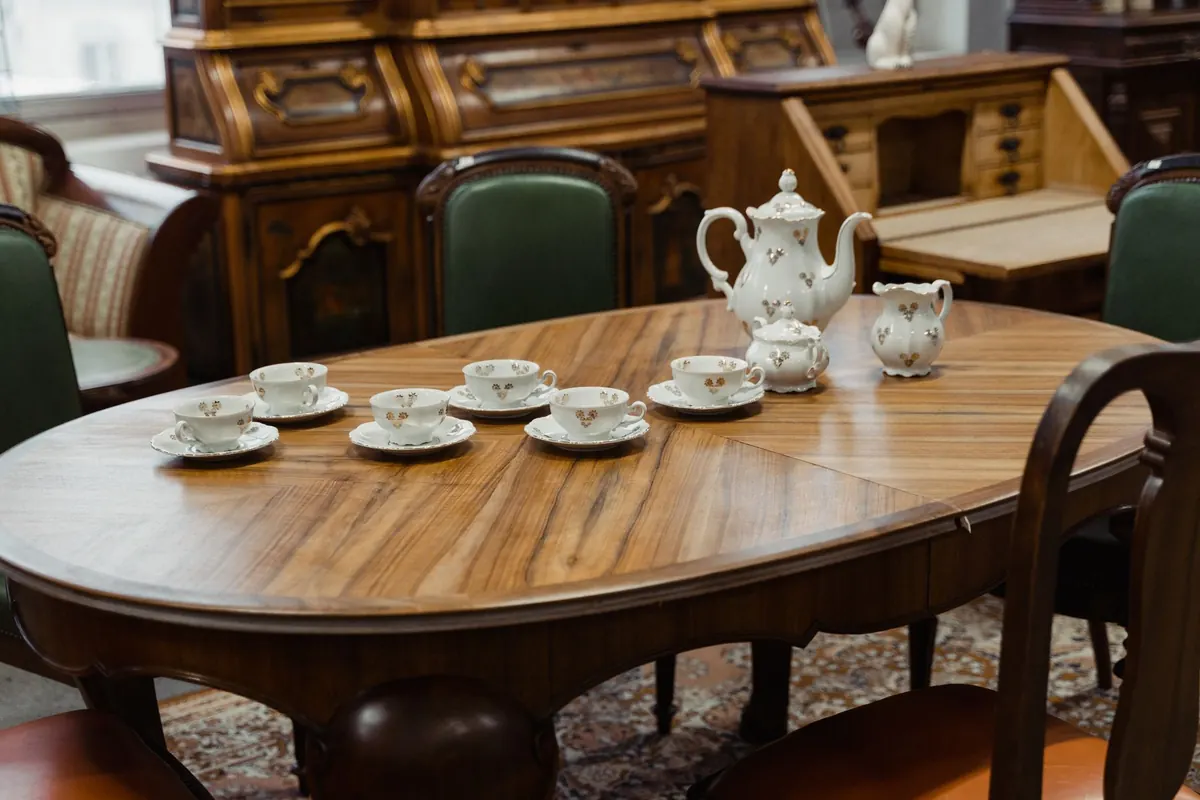
Photo: Tima Miroshnichenko / Pexels